
The integration problem: why AI video demos never survive contact with a pipeline
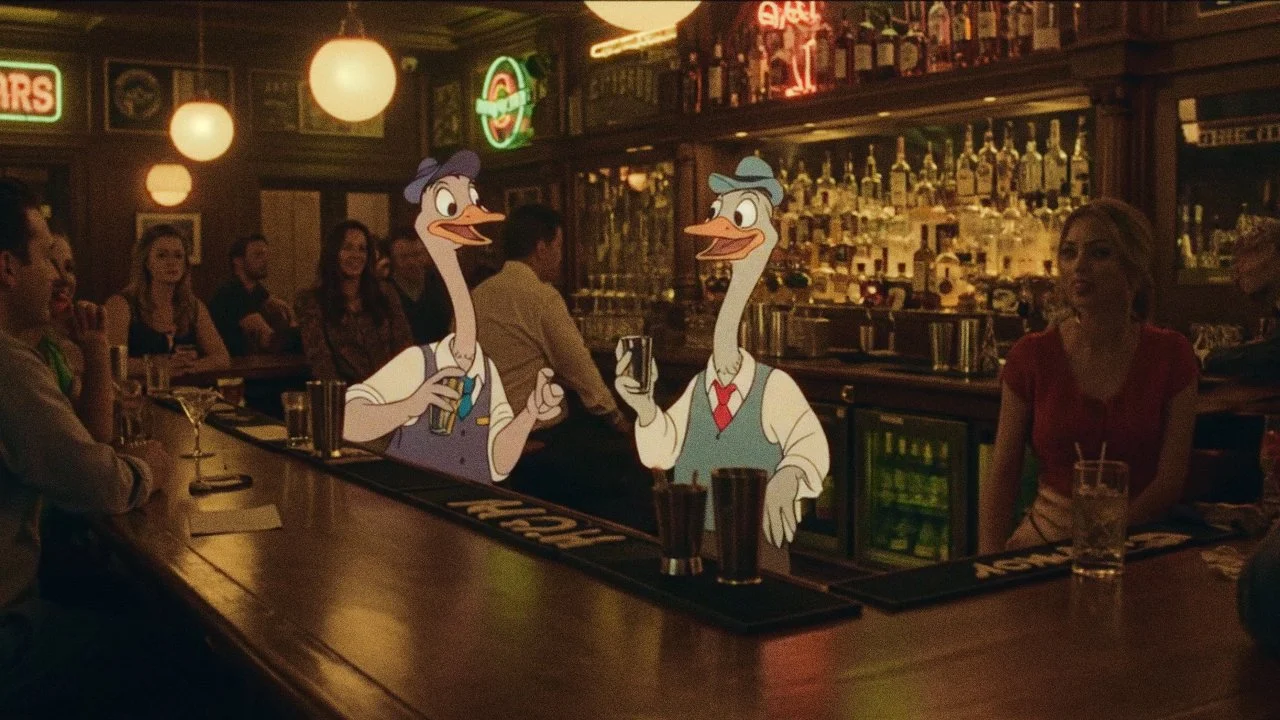
Every studio has seen the demo by now. Someone generates a gorgeous eight seconds in a browser tab, the room nods, and everyone agrees the technology has arrived. Then three months pass and nothing about how that studio makes animation has changed.
We have written about why that happens at the shot level: the models fail director review, and prompting cannot take a note. But there is a third failure mode that kills AI adoption even when the output is good and the control problem is solved. The demo lives in a browser. The production lives in a pipeline. Those two places are further apart than anyone admits.
A great shot in a web app is an island
Think about what a shot actually is inside a working studio. It is not a video file. It is a node in a system: a comp in a project file, with versions behind it, render passes around it, a naming convention holding it in place, and a review trail explaining why version 14 replaced version 13. Every department can find it, open it, and change it without breaking anything downstream.
Now generate that same shot in a consumer web app. What you have is an mp4 in a downloads folder. No versions. No project file. No layers. No way for a note like “keep the background, fix the arm” to travel back into the thing that made it. The shot looks finished, and it is unusable, because nothing in the studio can hold onto it.
The tool-hopping tax
Studios try to bridge the gap manually, and the bridge becomes its own job. Export from the pipeline, upload to the generation app, prompt, download, import, conform, discover the frame rate is wrong, do it again. Every round trip loses time and metadata, and the person who runs the AI tool quietly becomes a bottleneck the schedule depends on.
Under deadline pressure this parallel workflow is the first thing that dies. Not because the output was bad, but because maintaining two pipelines costs more than the generation saves. This is the honest reason most studio AI experiments end after the pilot. The tool never earned a place inside the system that ships the work.
There is also a quieter issue that enterprise studios raise before anyone mentions image quality: work in progress leaving the building. Client material uploaded to a consumer web app is a conversation with legal, not a workflow. Whatever touches the pipeline has to live where the pipeline lives.
Integration means the tool comes to the artist
The fix is not a better export button. It is inverting the whole arrangement: instead of carrying shots out to where the AI lives, the AI moves into the software the studio already runs on.
That is the principle we built Fossa Tether on. It sits inside Adobe After Effects, because for motion design that is where the pipeline already is. The comp is the prompt: your layers, your keyframes, your masks drive the generation. Output lands back in the same timeline as a layer, versioned in the same project file, reviewable in the same session. A note travels the way notes always have, from the director to the timeline to the next version.
Nobody learns a new tool. Nobody maintains a second workflow. Nothing leaves the project. The AI becomes one more renderer the pipeline can call, which is the only form in which a pipeline can actually absorb it.
The demo test worth running
If you are evaluating AI video tools for production, skip the showreel and ask one question: where does the output live? If the answer is a browser tab, you are looking at a parallel workflow, and parallel workflows lose to deadlines every time. If the answer is inside the software your artists already have open, integration is solved before the first frame renders.
Generation quality keeps improving on its own. Integration is the part someone has to build.
Animated Company is a London studio bringing AI into animation production: R&D for major studios, finished animation and VFX, and Fossa, our AI toolset for Adobe After Effects. Fossa Tether is in public beta. If you want AI video inside your pipeline instead of next to it, get in touch at hello@animatedcompany.com.